 Skip to content
What Medical Device Manufacturers Get Wrong About Warehouse Partners
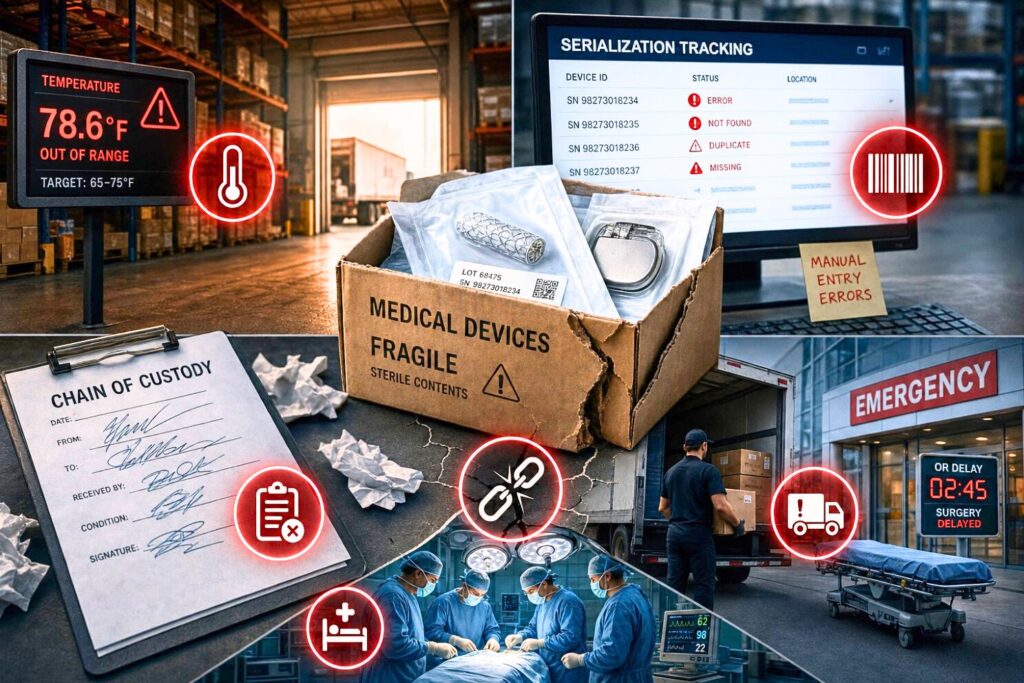
Your medical device just failed an FDA audit because your warehouse partner treated it like a consumer electronics shipment. The temperature logs show gaps, the serialization tracking has manual errors, and the chain of custody documentation looks like it was assembled by interns.
This scenario plays out monthly across the medical device industry. Operations directors choose logistics partners based on price and proximity, then watch compliance disasters unfold in real time. The fundamental problem: most manufacturers approach medical device warehouse partnership like they’re shipping sneakers instead of life-saving equipment.
The stakes couldn’t be higher. A single temperature excursion can destroy an entire product lot. One serialization error triggers recall procedures that cost millions. When hospital deliveries fail, surgical schedules collapse and patient care suffers.
This article exposes the four critical mistakes medical device manufacturers make when selecting warehouse partners and reveals what industry leaders do differently to avoid these costly failures.
The Fatal Flaw: Treating Medical Devices Like Consumer Goods
Generic 3PLs approach medical devices with the same mentality they use for consumer electronics or apparel. They assume warehouse space is warehouse space, handling is handling, and shipping is shipping. This fundamental misunderstanding creates compliance disasters that ripple through the entire supply chain.
Temperature excursions represent the most visible failure point. Standard warehouses maintain ambient temperatures somewhere between 60-80°F, with fluctuations during loading dock operations and seasonal changes. For consumer goods, these variations are irrelevant. For medical devices requiring controlled ambient storage, each degree outside the 65-75°F range potentially compromises product integrity.
Consider implantable cardiac devices: a single temperature spike above 77°F can alter the polymer coatings that prevent tissue rejection. The device still looks identical, passes visual inspection, but fails during implantation. The liability costs exceed $2 million per incident, not counting the damage to manufacturer reputation.
Sterile packaging presents another layer of complexity that generic handlers consistently underestimate. Medical device packaging isn’t protective wrapping, it’s a critical component of the sterile barrier system. Warehouse staff trained on consumer goods handle packages with normal care, not understanding that compression, stacking pressure, or minor tears compromise sterility.
The documentation requirements separate medical device logistics from all other verticals. FDA auditors don’t accept “we stored it properly” as evidence. They require time-stamped temperature logs, batch records with chain of custody signatures, and complete traceability from manufacturer to end user. Generic 3PLs create documentation after problems occur, not as part of standard operations.
Purpose-built medical device handling protocols start with facility design. Our 700,000 square foot Phoenix facility maintains controlled ambient conditions year-round, even when Arizona temperatures exceed 115°F outside. Every storage zone operates within the 65-75°F range with continuous monitoring and automatic alerts for any deviation.
Staff training focuses specifically on sterile handling techniques and FDA compliance requirements. Team members understand that medical device packaging requires specialized care, not generic warehouse handling. This training investment pays dividends when audit season arrives and documentation stands up to regulatory scrutiny.
Serialization Chaos: When Your Warehouse Can’t Track
The Drug Supply Chain Security Act (DSCSA) requires serialization tracking for medical devices, but most warehouses treat this like inventory management with extra paperwork. This approach guarantees compliance failures when FDA inspectors arrive with specific tracking questions.
Lot tracking failures create recall nightmares that destroy manufacturer reputations overnight. When contamination or defects surface in the field, manufacturers need immediate visibility into affected inventory locations. Generic 3PLs provide batch reports generated from manual entries, often containing errors that make recall coordination impossible.
A cardiac stent manufacturer discovered this reality during a polymer coating defect recall. Their 3PL partner reported 847 affected devices across 23 hospital systems. The actual number: 1,243 devices across 31 facilities. Manual tracking errors delayed critical device retrievals by 72 hours, extending patient risk exposure and multiplying liability costs.
Real-time visibility becomes crucial when medical device inventory moves through complex distribution networks. Hospitals expect instant confirmation when emergency cases require specific devices. Sales teams need immediate inventory availability data during procedure planning. Manual tracking systems create delays that impact patient care and sales performance.
API-first warehouse management systems solve these problems by connecting directly with manufacturer ERPs. Real-time synchronization eliminates manual data entry errors and provides instant visibility across all inventory locations. When recall situations develop, precise tracking data accelerates response times and reduces exposure.
Our WMS integration approach treats serialization as core functionality, not an add-on feature. Every device receives unique tracking from receipt through shipment, with automatic compliance reporting that maps to FDA requirements. This eliminates the panic that typically accompanies audit preparation.
The system captures more than basic location data. Temperature history, handling events, and custody transfers create complete product biographies that satisfy the most detailed regulatory inquiries. When manufacturers need recall support, we provide precise device locations within 15 minutes, not business days.
The Temperature Control Disaster Waiting to Happen
Standard warehouses maintain “climate controlled” environments that would destroy medical device inventory within days. The definition of climate control varies dramatically between logistics providers, with most considering 60-80°F acceptable for sensitive products.
Medical devices require consistent controlled ambient conditions that never vary outside the 65-75°F range. Electronic components in diagnostic equipment begin degrading at 76°F. Polymer components in surgical instruments become brittle below 64°F. These aren’t theoretical concerns, they’re physics principles that determine product performance.
Humidity control presents an equally critical challenge that generic warehouses consistently underestimate. Arizona’s desert climate creates extreme humidity fluctuations during monsoon season and winter months. Standard warehouse systems maintain 30-70% relative humidity, but medical devices require consistent 45-65% to prevent corrosion and electronic component degradation.
Loading dock operations represent the highest risk environment for temperature excursions. Standard warehouses open dock doors for extended periods during receiving and shipping, allowing external temperatures to affect nearby storage areas. During Phoenix summer months, these temperature spikes can exceed 100°F for products staged near dock doors.
Our controlled ambient solution addresses these challenges through facility design and operational protocols. The 700,000 square foot facility operates as a sealed environment with airlocks preventing external temperature infiltration. Climate systems maintain precise 65-75°F temperatures throughout all storage zones, with redundant systems preventing any possibility of system failure impact.
Environmental monitoring provides continuous verification of controlled conditions. Sensors throughout the facility track temperature and humidity every 60 seconds, with automatic alerts for any reading outside acceptable ranges. This monitoring data creates the audit trails that FDA inspectors require, not the approximated logs that cause compliance failures.
The investment in controlled ambient storage pays returns through product integrity protection and compliance assurance. Medical device manufacturers avoid the replacement costs associated with temperature-damaged inventory and the liability risks of compromised products reaching patients.
Hospital Delivery: Where Most 3PLs Fail Spectacularly
Generic logistics providers view hospital delivery like commercial address shipping with additional security requirements. This fundamental misunderstanding of healthcare facility operations creates delivery failures that impact surgical schedules and patient care.
Operating room coordination requires specialized expertise that generic 3PLs simply don’t possess. OR schedules change constantly based on patient conditions, emergency cases, and surgeon availability. Delivery windows measured in 30-minute increments demand coordination capabilities that exceed standard logistics planning.
Sterile packaging integrity becomes critical during the final delivery mile. Hospital receiving protocols require intact packaging verification before accepting medical device shipments. Generic delivery teams lack training to identify packaging compromises that could affect sterility, leading to rejected shipments and delayed procedures.
Emergency delivery capability separates healthcare logistics from commercial shipping entirely. When surgical complications require immediate device availability, manufacturers need logistics partners capable of same-day or next-flight delivery coordination. Generic 3PLs treat these requests as premium shipping upgrades rather than patient care emergencies.
A orthopedic implant manufacturer learned this lesson during a complex spine surgery case. The surgeon discovered mid-procedure that standard implant sizes wouldn’t fit the patient’s anatomy. The case required custom-sized components available in Phoenix inventory, 350 miles away. Their generic 3PL partner quoted next-business-day delivery, extending the patient’s surgery by 18 hours.
White-glove delivery experience addresses these challenges through healthcare-focused protocols and specialized training. Our delivery teams understand hospital receiving procedures, OR coordination requirements, and the urgency that medical emergencies demand.
Hospital room delivery capability eliminates procurement department delays that can extend delivery times by days. Instead of leaving packages at receiving docks, our teams coordinate directly with nursing staff to ensure devices reach the point of use without internal hospital logistics delays.
Same-day emergency response capabilities recognize that patient care doesn’t follow standard business hours. When surgical cases require immediate device availability, our Phoenix location enables rapid response throughout the Southwest region, with direct coordination to hospital receiving teams.
Choosing Healthcare-Focused Logistics Partnership
Medical device manufacturers need logistics partners who understand that compliance isn’t optional and patient care depends on supply chain reliability. The selection criteria should focus on healthcare-specific capabilities rather than generic logistics metrics.
FDA compliance expertise represents the foundation requirement for any medical device logistics partnership. Partners should demonstrate audit-ready documentation systems, controlled ambient storage capabilities, and serialization tracking that exceeds DSCSA requirements. Request specific examples of successful FDA inspections, not general compliance claims.
Temperature control validation requires facility tours and environmental monitoring system demonstrations. Verify continuous monitoring capabilities, redundant climate systems, and the specific temperature ranges maintained throughout storage areas. Request historical data showing consistent performance during extreme weather events.
Hospital delivery coordination experience separates healthcare logistics providers from generic shipping companies. Partners should demonstrate OR delivery capabilities, emergency response protocols, and direct relationships with healthcare facility receiving teams.
Technology integration capabilities ensure seamless connection with manufacturer ERP systems and real-time inventory visibility. API-first warehouse management systems eliminate manual processes that introduce compliance errors and delays.
Red flags include partners who consider medical devices as specialized consumer goods, offer temperature control as optional upgrades, lack healthcare facility delivery experience, or require manual processes for compliance reporting.
The investment in healthcare-focused logistics partnership pays returns through compliance assurance, product integrity protection, and supply chain reliability that supports patient care rather than creating obstacles.
The Future of Medical Device Supply Chain Excellence
The medical device industry continues evolving toward more complex products, stricter regulatory requirements, and higher patient care expectations. Logistics partnerships must evolve beyond basic warehousing and shipping to become strategic supply chain extensions that enable manufacturer growth.
Successful medical device companies recognize that logistics partnership decisions impact patient outcomes, regulatory compliance, and company reputation. These manufacturers choose partners based on healthcare expertise, not generic logistics capabilities.
The competitive advantage comes from supply chain reliability that enables focus on product development and patient care rather than logistics crisis management. When warehouse partners understand medical device requirements and hospital delivery complexities, manufacturers can scale operations confidently.
Your medical devices save lives, improve patient outcomes, and advance healthcare capabilities. They deserve logistics partners who understand these stakes and deliver the specialized handling, compliance expertise, and delivery coordination that healthcare demands.
The choice is simple: continue accepting generic logistics limitations or partner with healthcare logistics specialists who treat your devices with the care they require and your patients deserve.
Josh Proctor | Healthcare Logistics Specialist, Dircks Moving & Logistics
Related Dircks Logistics services
- Healthcare logistics for your industry
- Climate-controlled warehouse in Phoenix
- Freight distribution and last-mile delivery
- Phoenix 3PL services
Keep reading
- Healthcare Warehouse Training That Prevents Care Delays
- Healthcare Logistics Compliance: Why Shortcuts Kill Patients
Need warehousing, fulfillment, or distribution in Phoenix or Houston? Request a quote or call (602) 267-9401.
Frequently Asked Questions
What should medical device manufacturers look for in a 3PL?
FDA registration, lot-level traceability, documented handling procedures, and controlled storage conditions.
Why does lot tracking matter for medical devices?
Lot-level tracking is what makes recalls and regulatory documentation possible.
Does Dircks require volume minimums?
No. Dircks has no volume minimums and no long-term contracts.
