...

Josh Proctor

Josh Proctor leads healthcare logistics at Dircks Moving & Logistics, helping hospitals, medical device manufacturers, and health product distributors move temperature-sensitive, life-critical inventory without delays. He specializes in FDA-ready warehousing, chain-of-custody documentation, and white-glove last-mile delivery to OR suites and patient floors. Josh writes about building healthcare supply chains that protect patient care, not just product.

Josh Proctor

Josh Proctor

Healthcare Logistics Specialist, Dircks Moving & Logistics

Josh Proctor leads healthcare logistics at Dircks Moving & Logistics, helping hospitals, medical device manufacturers, and health product distributors move temperature-sensitive, life-critical inventory without delays. He specializes in FDA-ready warehousing, chain-of-custody documentation, and white-glove last-mile delivery to OR suites and patient floors. Josh writes about building healthcare supply chains that protect patient care, not just product.

View LinkedIn
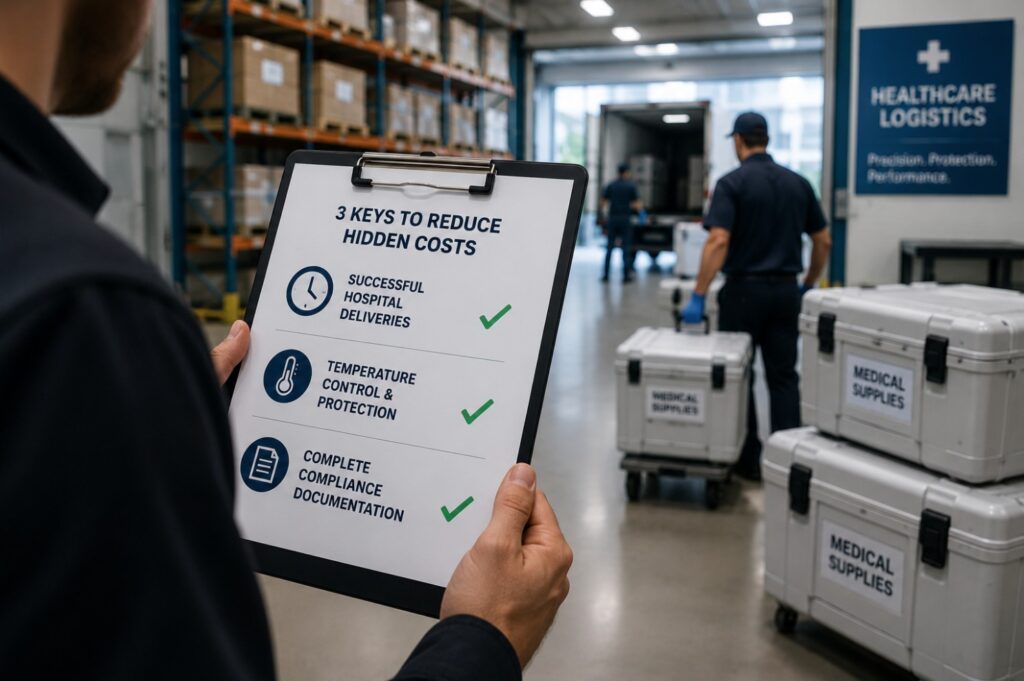
Healthcare logistics professional holding a checklist highlighting three ways to reduce health product distribution costs: successful hospital deliveries, temperature control and protection, and complete compliance documentation. Temperature-controlled medical supply containers and warehouse operations are visible in the background.

Health Product Distributors: Are You Losing Money on Deliveries?

Health Product Distributors: Are You Losing Money on Deliveries?   Hidden Costs Eating Your Health Product Distribution Margins Your P&L shows delivery costs at 8-12% of revenue. The real number? Try 23-27%. Health product distributors face a margin crisis hiding in plain sight. While you track obvious expenses like fuel and driver wages, three cost […]

Health Product Distributors: Are You Losing Money on Deliveries? Read More »
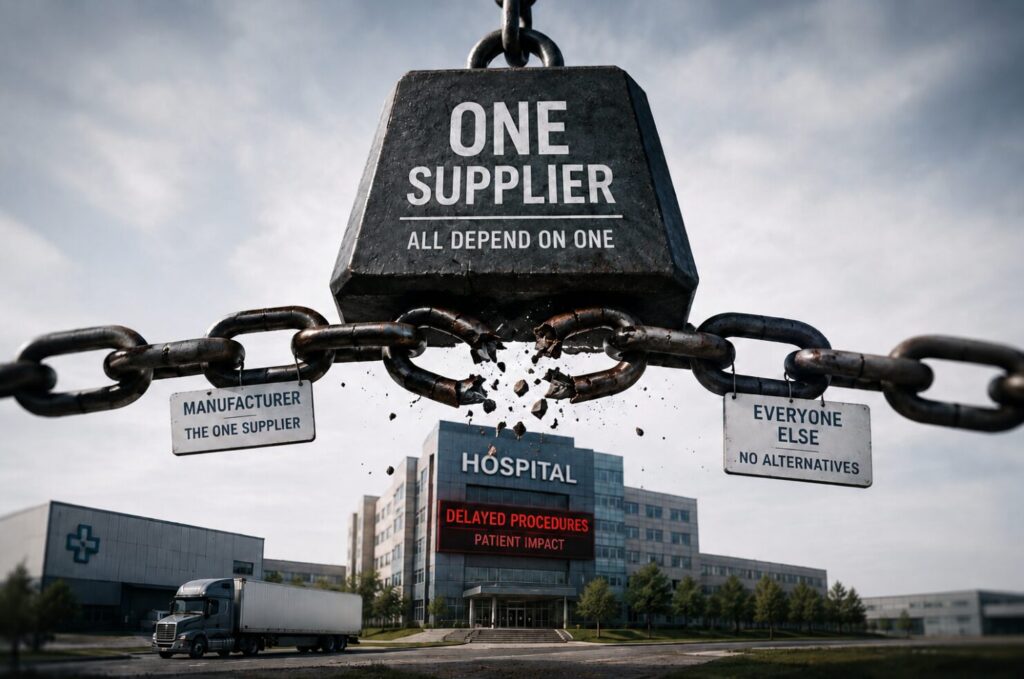
A conceptual healthcare supply chain illustration showing a massive weight labeled “One Supplier” causing a large chain to break above a hospital. Signs on the chain read “Manufacturer” and “Everyone Else,” symbolizing the risks of relying too heavily on a single medical supplier and the resulting impact on hospital operations and patient care.

Why Healthcare Supply Chains Break (and Who Pays the Price)

Why Healthcare Supply Chains Break (and Who Pays the Price) A single supply chain failure can halt cardiac surgery. When a Phoenix medical center’s primary supplier faced a two-week disruption last year, their backup plan consisted of frantic phone calls to secondary vendors. The result: delayed procedures, emergency procurement at 300% markup, and stressed surgical

Why Healthcare Supply Chains Break (and Who Pays the Price) Read More »

Hospital staff transporting medical devices and surgical instrumentation through a healthcare facility to support operating room procedures and last-mile medical logistics.

Medical Device OR Delivery: Last-Mile Without Delays

Medical Device OR Delivery: Last-Mile Without Delays The OR Delivery Problem That Costs Hospitals $2.3 Million Annually At Phoenix Children’s Hospital, a critical spinal surgery was delayed 47 minutes. The specialized instrumentation sat in receiving while staff searched for the delivery. Surgery delays cost $1,700 per minute. That single incident: $79,900 in lost revenue, not

Medical Device OR Delivery: Last-Mile Without Delays Read More »

Climate-controlled Phoenix warehouse storing palletized medical device inventory on tall pallet racks — Dircks Logistics temperature-sensitive 3PL storage facility in Arizona

Healthcare 3PL Compliance in Phoenix: FDA-Ready Warehousing

Healthcare 3PL Compliance in Phoenix: FDA-Ready Warehousing Why Healthcare Compliance Breaks Most 3PLs Your medical device shipment sits rejected at the hospital loading dock. Again. The procurement manager shakes their head as your 3PL scrambles to explain why their documentation doesn’t meet hospital standards. Six months of relationship building evaporates in 15 minutes. This scenario

Healthcare 3PL Compliance in Phoenix: FDA-Ready Warehousing Read More »

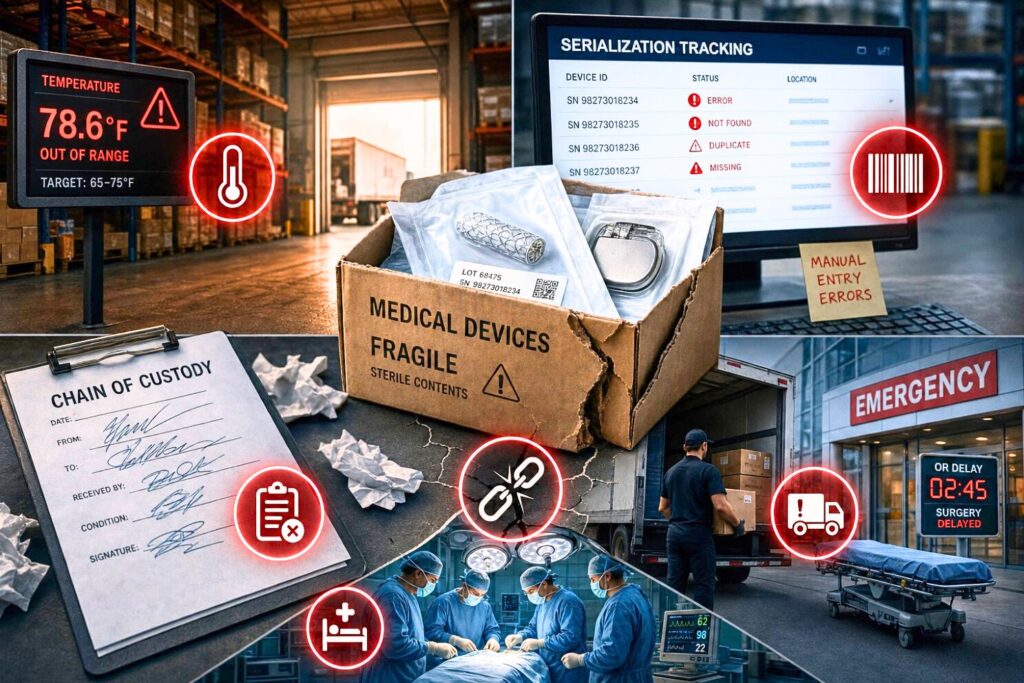
Illustration of medical device warehouse compliance failures showing temperature excursion alerts, serialization tracking errors, broken chain of custody documentation, delayed hospital delivery, and surgical disruption.

What Medical Device Manufacturers Get Wrong About Warehouse Partners

What Medical Device Manufacturers Get Wrong About Warehouse Partners Your medical device just failed an FDA audit because your warehouse partner treated it like a consumer electronics shipment. The temperature logs show gaps, the serialization tracking has manual errors, and the chain of custody documentation looks like it was assembled by interns. This scenario plays

What Medical Device Manufacturers Get Wrong About Warehouse Partners Read More »

Seraphinite AcceleratorOptimized by Seraphinite Accelerator
Turns on site high speed to be attractive for people and search engines.