 Skip to content
Arizona Logistics Real Estate Boom: Chip Maker Impact
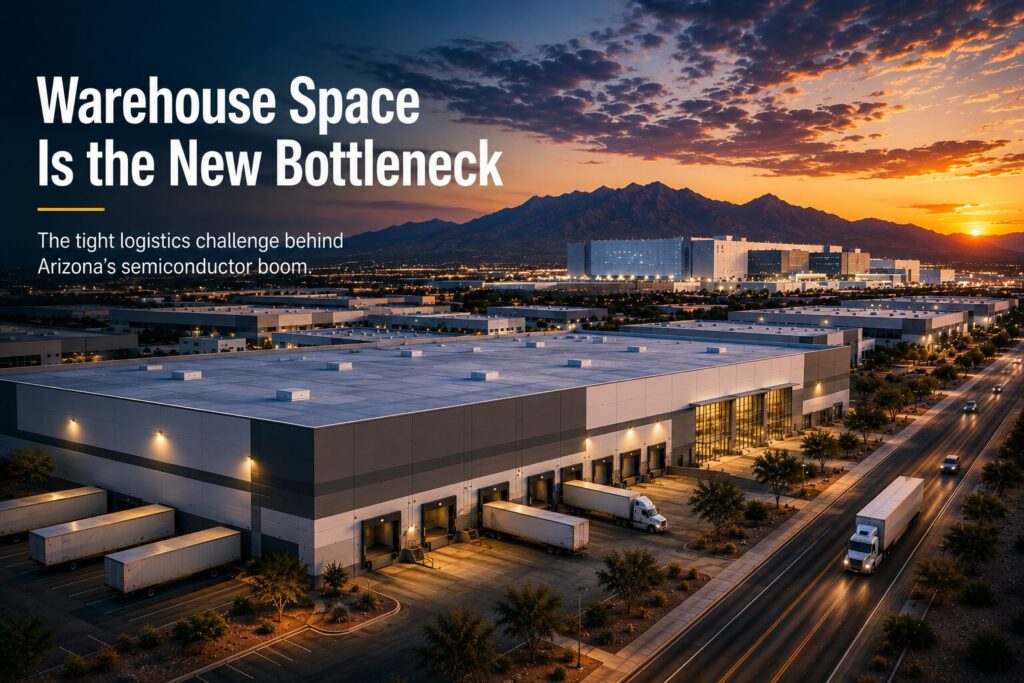
Arizona’s industrial real estate explosion is creating an unexpected problem for semiconductor manufacturers. While the state attracts billions in chip investments, finding warehouse space near your fab operations has become a high-stakes game of logistics chess.
The numbers tell the story: industrial vacancy rates have plummeted below 3% statewide, while average lease rates jumped 22% in the past 18 months. Major retailers and e-commerce giants are snatching up millions of square feet, pushing chip manufacturers into a corner where proximity comes at a premium price.
This isn’t just about cost. When your just-in-time delivery windows shrink to hours and your components can’t tolerate Arizona’s 115°F summers, warehouse positioning becomes mission-critical. The question isn’t whether you need logistics space near your fab operations. The question is how to secure it without breaking your budget or compromising your supply chain integrity.
Arizona’s Industrial Real Estate Crisis: What Semiconductor Companies Face
The Chandler-Gilbert-Mesa semiconductor corridor is experiencing the tightest industrial real estate market in its history. TSMC’s 2,000-acre Phoenix campus and Intel’s Ocotillo expansion in Chandler have fundamentally changed who’s competing for warehouse space.
Traditional warehousing tenants—distribution centers, manufacturing overflow, fleet maintenance—now compete directly with semiconductor suppliers who need controlled environments, advanced security systems, and locations within 15-20 minutes of fab operations. The result is a bidding environment where standard warehouse space routinely commands $12-18 per square foot annually, while climate-controlled facilities near fab corridors have broken the $22 mark.
For semiconductor companies managing tight component budgets, these costs can erode the economic advantages that brought them to Arizona in the first place. The challenge intensifies when you factor in lead times: quality industrial space near the fabs often requires 12-18 months advance planning.
The True Cost of “Close Enough” Warehouse Positioning
Some semiconductor operations managers try to solve the proximity problem by accepting locations 30-45 minutes from their fab. The math seems reasonable: why pay premium prices for a 10-minute location when a 35-minute location costs 40% less?
This calculus ignores the operational reality of semiconductor manufacturing. When a fab needs emergency components—and they always need emergency components—your logistics response time determines whether production continues or halts. At an average cost of $50,000 per hour for fab downtime, a 25-minute location advantage pays for itself with a single emergency delivery.
The temperature factor compounds this calculation. Arizona summers regularly exceed 115°F. Component transit times that seem acceptable in the morning become dangerous by afternoon. Semiconductor components with strict temperature tolerances need controlled environments throughout their supply chain, not just at storage endpoints. Longer transit distances mean longer exposure to temperature extremes, even with refrigerated transport.
Climate Control Requirements Near Arizona’s Chip Fabrication Facilities
Semiconductor components have narrower temperature tolerances than most industrial products. Integrated circuits, bare die, and sensitive packaging materials can degrade at temperatures that wouldn’t affect standard manufacturing components.
Arizona’s climate creates three distinct challenge windows: summer heat that regularly exceeds 115°F from June through September, temperature cycling between cool nights and hot days that stresses packaging materials, and low humidity that can create static buildup during dry winter months.
Effective semiconductor warehousing near Arizona fabs requires facilities with HVAC systems designed for extreme conditions—not just standard climate control, but systems capable of maintaining precise temperature and humidity ranges through Phoenix summers. Look for facilities with redundant cooling systems, backup power for HVAC continuity, and real-time environmental monitoring that alerts your team to any deviations.
Security Infrastructure for High-Value Semiconductor Components
Semiconductor components represent some of the highest-value inventory in industrial supply chains. A single pallet of advanced processor chips can represent millions of dollars in value—making semiconductor warehouses attractive targets for sophisticated theft operations.
Security requirements for semiconductor storage go beyond standard industrial warehouse security. Your facility needs 24/7 monitored access control, comprehensive surveillance coverage without blind spots, and staff with semiconductor-specific training on handling and security protocols.
The real estate boom has created pressure to accept facilities with inadequate security in order to secure proximity. Resist this tradeoff. The security requirements for semiconductor inventory aren’t negotiable from a liability or insurance perspective, and a single theft incident can cost more than years of premium lease payments.
How Dircks Secures Semiconductor Logistics Positioning in Arizona’s Tight Market
Dircks maintains 700,000 square feet of industrial space positioned strategically near Arizona’s major fab operations. We made the commitment to secure this footprint before the real estate boom accelerated, which means our clients benefit from established infrastructure at sustainable rates.
Our facilities were designed with semiconductor requirements in mind: climate control systems built for Phoenix summers, security infrastructure that meets the standards of major chip manufacturers, and locations that put your components within 15 minutes of TSMC Phoenix and 12 minutes of Intel Chandler.
As Arizona’s industrial real estate market continues tightening, semiconductor companies that haven’t established logistics partnerships near their fab operations face increasingly difficult choices. The window for securing favorable positioning is narrowing.
The most expensive logistics decision in Arizona’s semiconductor boom isn’t paying premium rates for the right location. It’s accepting inadequate positioning because the right space seemed too costly—and then watching that decision multiply into operational disruptions, emergency freight costs, and production delays that dwarf the rent difference.
Brian Mayer | Semiconductor Logistics Specialist, Dircks Moving & Logistics
Related Dircks Logistics services
- Semiconductor logistics for your industry
- Phoenix 3PL services
- Warehousing in Phoenix
- Cross-docking in Phoenix
Keep reading
- Scaling Storage: The Semiconductor Supply Chain's New Reality
- The Supply Chain Gap Nobody's Talking About in Fab Country
Need warehousing, fulfillment, or distribution in Phoenix or Houston? Request a quote or call (602) 267-9401.
