 Skip to content
Semiconductor Logistics Security: Protecting $50K Components
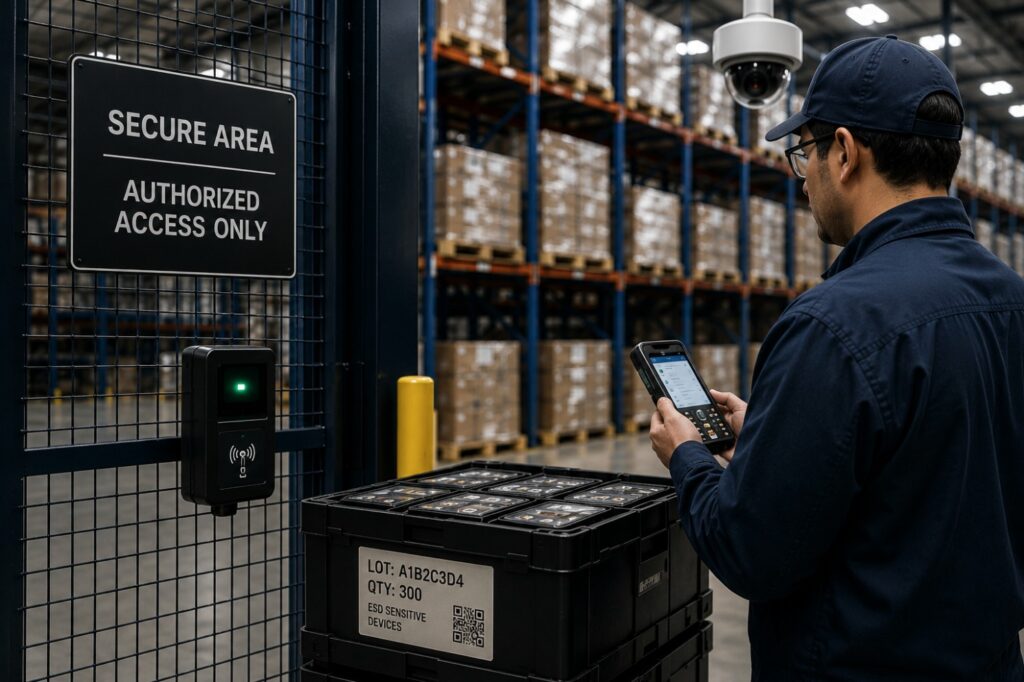
A single contaminated semiconductor component worth $50,000 can shut down an entire production line. When that happens, manufacturers face downtime costs exceeding $100,000 per hour while scrambling to source replacement parts.
This reality drives Operations VPs and Supply Chain Directors to prioritize security above almost everything else when selecting 3PL partners. The stakes are simply too high for commodity warehouse approaches.
The semiconductor industry has learned hard lessons about security gaps. Component theft rings target high-value chips. Static discharge destroys sensitive components instantly. Extended transport windows create multiple exposure points for both security breaches and environmental damage.
This article examines how leading semiconductor companies protect their supply chains through precision security protocols, strategic facility positioning, and technology integration that eliminates blind spots.
Why Security Breaches Cost Semiconductor Companies More Than Component Value
The visible cost of semiconductor security failure is the component value. The actual cost is much larger.
Production line shutdowns trigger cascade costs: idle equipment, idle workforce, delayed customer orders, and expedited freight charges to restore supply. A single $50,000 component theft that causes 4 hours of downtime at $100,000/hour represents $450,000 in total impact.
Customer relationship damage extends the cost further. Semiconductor manufacturers operate under strict delivery commitments to their customers. Supply disruptions caused by security failures trigger contractual penalties, expedited shipping obligations, and customer relationship damage that persists long after the incident.
Regulatory exposure adds another dimension. FDA-regulated semiconductor components used in medical devices carry documentation requirements that security breaches can compromise. A stolen component that re-enters the supply chain through gray market channels creates product safety exposure that no manufacturer wants to manage.
Physical Security Requirements for Semiconductor Warehousing
Effective physical security starts with facility design. Semiconductor warehouses require security infrastructure that goes beyond standard industrial facilities:
Perimeter control with multiple access layers: Effective facilities implement security zones that require separate authentication for each transition. Shipping docks, general storage, and high-value component areas each have independent access control. Visitors can access shipping areas without being able to reach storage zones.
24/7 monitored camera systems with no blind spots: Standard warehouse camera systems leave coverage gaps at loading docks, in racking aisles, and at exit points. Complete coverage requires overlapping camera fields of view and active monitoring, not just recording for post-incident review.
Vehicle access control: Delivery vehicles should be logged, inspected, and tracked from facility entry to exit. Driver credentialing prevents unauthorized vehicles from accessing loading areas.
Background-verified staff: Everyone who accesses semiconductor storage areas should have verified employment history and background checks. This extends to cleaning crews, maintenance contractors, and temporary workers.
ESD Protection: The Security Threat You Can’t See
Static discharge destroys semiconductor components without leaving visible evidence. A component damaged by ESD may pass initial quality checks but fail in customer applications, triggering costly returns and warranty claims.
ESD protection requires systematic environmental control throughout the supply chain:
Controlled humidity maintains static dissipation. When relative humidity drops below 30%, static buildup increases dramatically. Arizona’s low winter humidity creates particular risk for unprotected storage environments.
Conductive flooring and grounded work surfaces provide static dissipation paths. Standard concrete warehouse floors accumulate charge. ESD-compliant facilities use conductive or dissipative flooring materials throughout component handling areas.
Personnel grounding is required for anyone handling ESD-sensitive components. Wrist straps, ESD footwear, and ionized air systems prevent static transfer during picking, packing, and quality inspection operations.
Packaging materials must be ESD-appropriate throughout the supply chain. Standard bubble wrap and packing materials generate static. Semiconductor components require conductive packaging from the time they leave the manufacturer until they reach the customer’s receiving dock.
Track and Trace Systems That Prevent Supply Chain Gaps
Modern semiconductor logistics requires component-level tracking visibility that extends beyond basic inventory management. Every movement—from receipt to storage location to pick to pack to ship—should generate documented, timestamped records.
Lot traceability protects against quality issues and enables rapid response to customer complaints. When a customer reports a component failure, lot traceability allows immediate identification of all components from the same production batch, enabling targeted investigation rather than broad recalls.
Environmental monitoring logs protect against temperature and humidity excursion claims. When customers report component failures potentially related to storage conditions, continuous environmental monitoring data provides documented proof of conditions throughout the storage period.
Chain of custody documentation supports both quality and security goals. Continuous documentation of component custody creates accountability at every transfer point and enables rapid investigation when discrepancies arise.
How Dircks Approaches Semiconductor Security
Our semiconductor logistics operations were designed around the security requirements of high-value component manufacturing. We’ve built our facility and processes around what leading semiconductor manufacturers actually need:
Our 700,000 square foot facility includes dedicated semiconductor storage zones with controlled access, continuous environmental monitoring, and ESD-compliant handling areas. Our security infrastructure includes 24/7 camera monitoring, perimeter control, and background-verified staff for all semiconductor handling positions.
Our track and trace capabilities provide component-level visibility from receipt to delivery. Customers have real-time access to inventory status, location within our facility, and complete transaction history. Our documentation meets FDA chain of custody requirements for medical-grade components and the security documentation standards of major semiconductor manufacturers.
Our Arizona location provides strategic positioning for manufacturers serving Arizona’s growing semiconductor ecosystem. Proximity to TSMC Phoenix and Intel Chandler minimizes transport time and exposure, reducing both security risk and environmental exposure for sensitive components.
Security in semiconductor logistics isn’t a feature—it’s the foundation. Every other capability depends on maintaining the integrity of the components you’re moving. Choose a 3PL partner whose security infrastructure is built for semiconductor requirements, not retrofitted for them.
Brian Mayer | Semiconductor Logistics Specialist, Dircks Moving & Logistics
